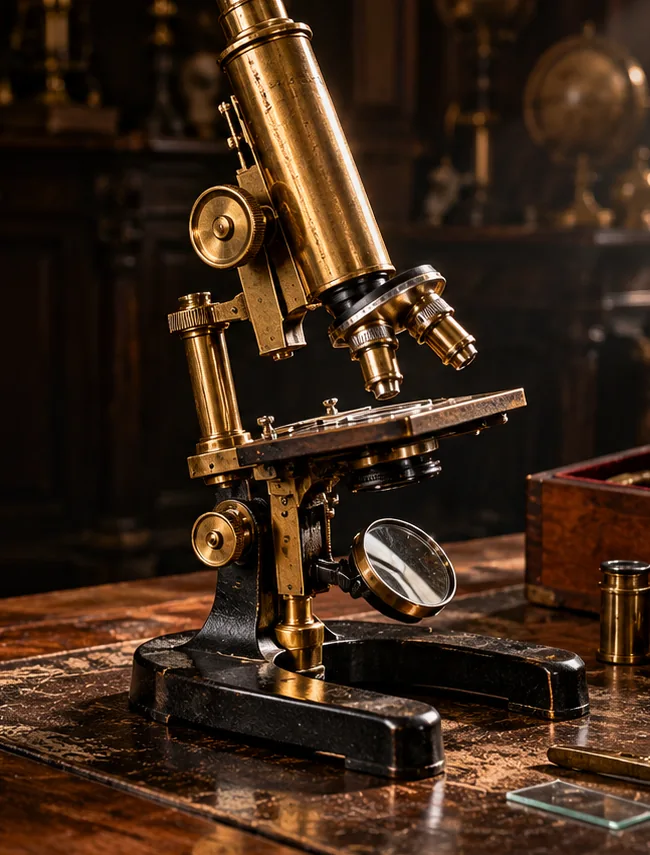
Begin with the signature
A maker profile is an identification aid—not proof that an individual online listing is genuine.
Carl Zeiss
Jena, Germany · 1846 onward. The precision revolution.
Explore the collection →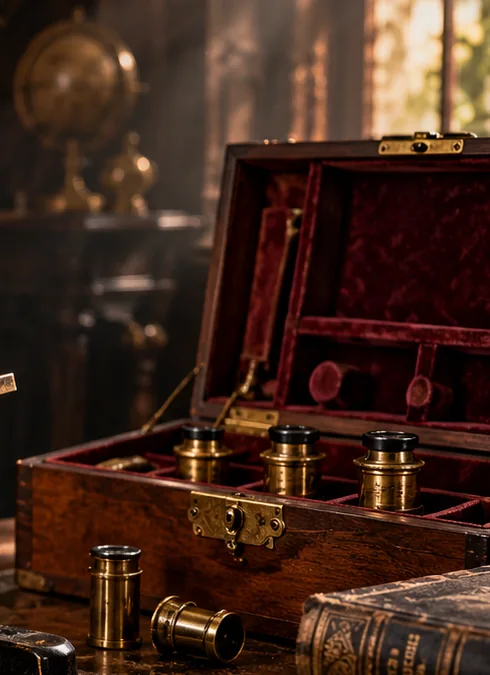
Ernst Leitz
Wetzlar, Germany · 19th–20th century. Elegant engineering from Wetzlar.
Explore the collection →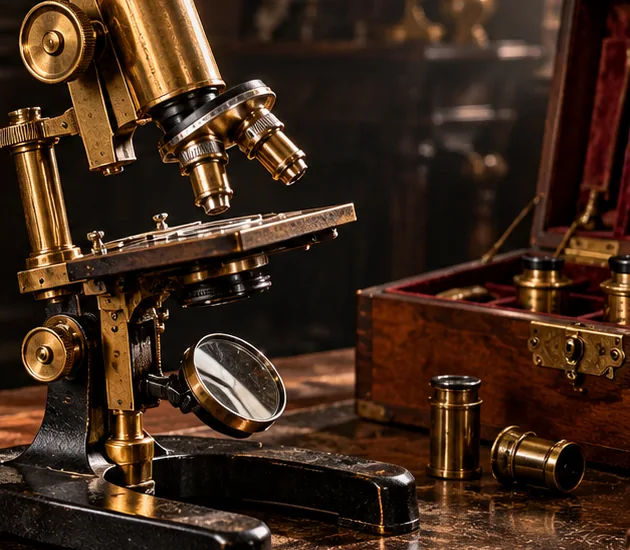
Bausch & Lomb
Rochester, New York · 19th–20th century. American laboratory heritage.
Explore the collection →
R. & J. Beck
London, England · 19th century. Precision in Victorian London.
Explore the collection →
Henry Crouch
London, England · 19th century. The beautiful working instrument.
Explore the collection →Spencer Lens Company
Buffalo, New York · 20th century. From brass to modern science.
Explore the collection →
Andrew Ross
Victorian London’s precision instrument maker. Compare the evidence against documented museum instruments.
Read the maker history →Edmund Culpeper
Eighteenth-century microscope designs. Compare the evidence against documented museum instruments.
Read the maker history →How to read a maker’s mark
Start with a clear photograph of the instrument itself, especially the foot and tube. Retailer labels, replacement objectives and later cases can complicate identification. A case that says “Zeiss” does not automatically make every piece inside a Zeiss instrument.
Compare shape, components and signatures with museum objects, maker archives and historic catalogs. When a date is uncertain, give a range and state what evidence supports it.