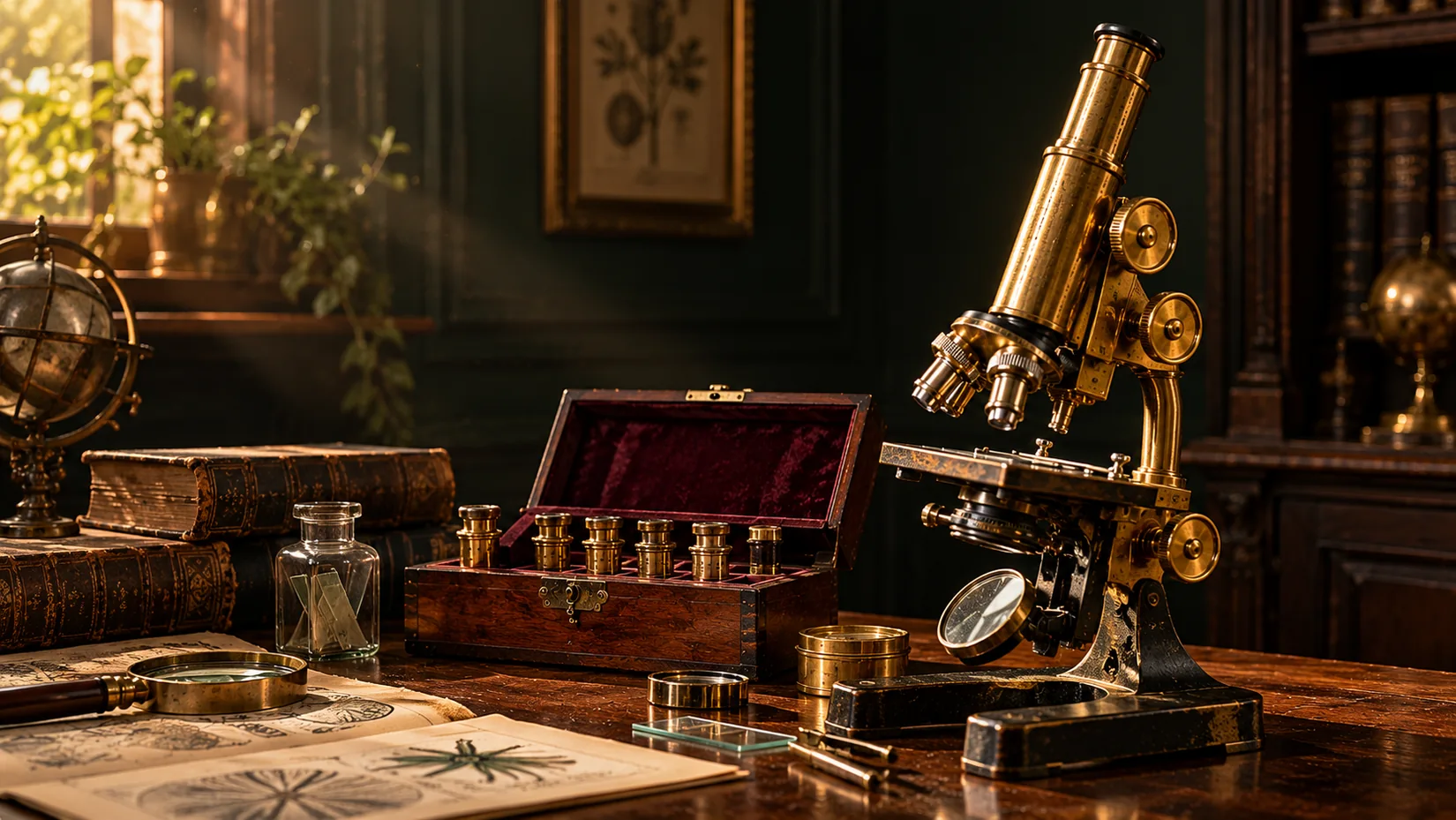
A family of elegant early microscopes, often imitated and too readily attributed to a single workshop.
What the archives actually establish
The Science Museum Group records an early eighteenth-century Culpeper microscope body and stand and a mid-century example with a composite body tube and shaped case. The name Culpeper also became an instrument-type shorthand. A microscope resembling this design is not automatically signed, made or sold personally by Edmund Culpeper.
How to recognize an example
Start with a full silhouette photograph, then inspect the maker’s inscription, legs, stage, tube construction, focus mechanism and objectives. Compare physical characteristics with the museum objects linked below. Names on accessories do not automatically identify the stand.
What to ask a seller
Request a legible image of every engraved plate and number; individual objective barrels; stage and mirror fittings; underside and case interior. Ask which parts are missing, damaged or restored. An old-fashioned finish or a wooden case alone cannot prove a manufacture date.
What determines interest and value?
Documentation, originality, condition, coherent accessories and historical importance matter, but value depends on specific comparable transactions. Avoid assigning prices without verified sold data. Make sure postage, insurance and any needed conservation work are included in your cost calculations.
How to shop with perspective
Search for the maker or instrument design, not just the phrase “rare antique microscope.” Evaluate each listing on its own evidence. Be especially careful where sellers describe all instruments sharing a shape as the original maker’s own products.