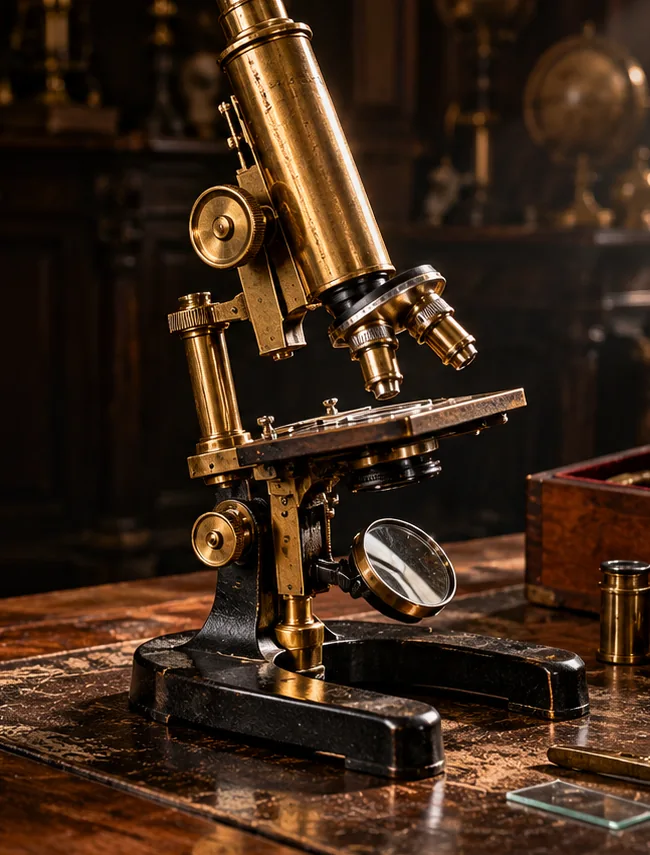
Why maker, completeness, originality, optics, and verified sale prices matter. These notes prioritize evidence over decorative language and make no claim to appraise an individual instrument.
There is no single antique microscope price
A genuine collector instrument might be inexpensive, or it might command a much higher asking price. The manufacturer’s name alone does not fix value. Condition, optics, original accessories, scarcity, completeness, documentation, location and buyer demand all matter. An active listing price is an offer—not a realized market value.
Compare like with like
A bare stand with no objectives should not be compared directly with a complete fitted case. Separate microscopes by manufacturer, broad date, model family, case, number of original objectives and working condition. Use sold transactions when available, inspect the photos, and record shipping and taxes separately.
What hurts value?
Replaced or missing objectives, incomplete fine focus, broken stage glass, corroded mirrors, a missing case, crude re-plating and heavily polished original lacquer can weaken an instrument’s originality. Some collectors value an authentic patina more than a glossy restoration.
A useful valuation worksheet
Write down three genuinely comparable completed sales: sale date, instrument description, condition, included parts and total price. Then note the differences rather than assigning a made-up percentage to each defect. If the sample is tiny or distorted by a one-off auction, say “insufficient comparable sales.”
Where shopping fits
eBay can surface many examples and may offer completed-listing filters; use it as one source of market evidence. Our outbound links are affiliate links, but no payment determines an instrument’s historical description or collecting advice.