Six guides to begin with
Practical advice grounded in historical collections and careful collecting methods.
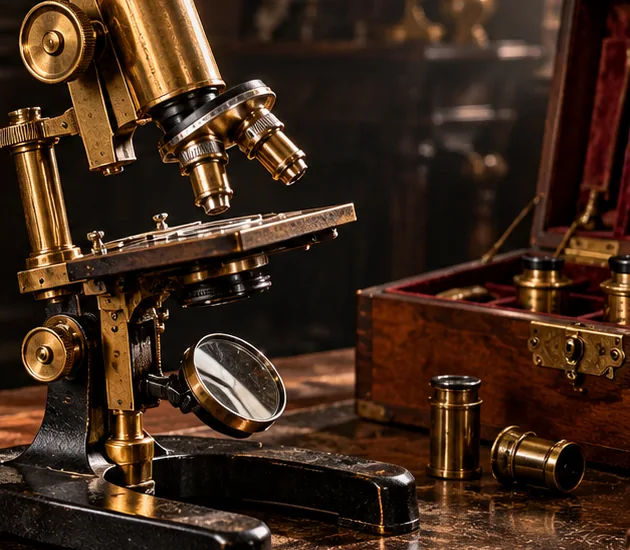
How to Identify an Antique Microscope
A practical investigation: nameplates, objectives, hinges, stages, and cases.
Explore the collection →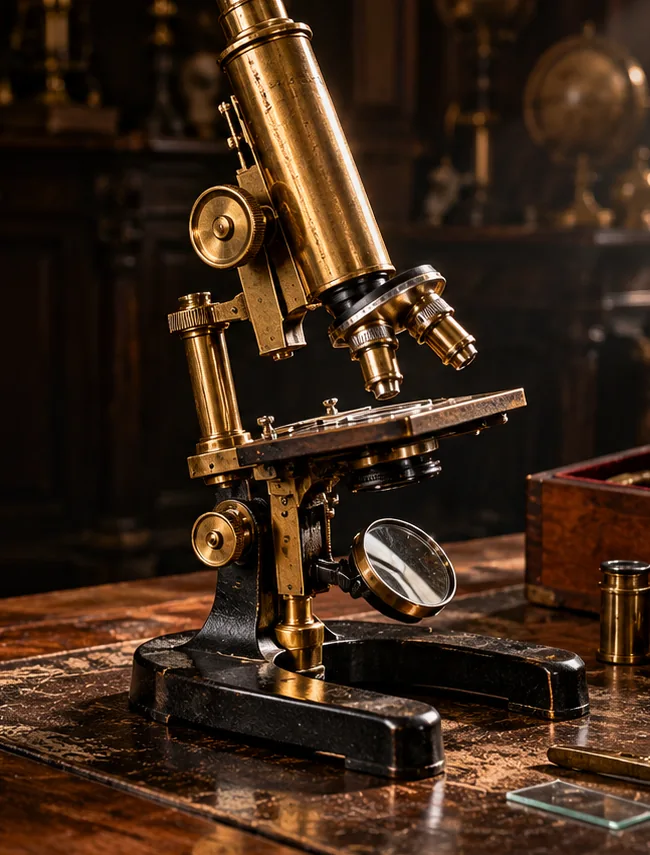
What Is an Antique Microscope Worth?
Why maker, completeness, originality, optics, and verified sale prices matter.
Explore the collection →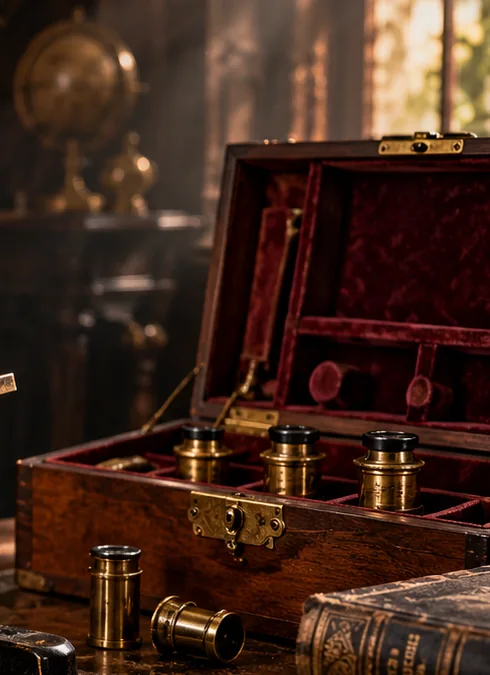
Buying Antique Microscopes on eBay
A collector’s inspection checklist for listings, shipping and returns.
Explore the collection →
Should You Polish an Antique Brass Microscope?
Conservation-first cleaning without erasing historic finishes.
Explore the collection →A Short History of the Antique Microscope
From 1700s pocket microscopes to the great optical workshops.
Explore the collection →The 12-Point Collector’s Checklist
A repeatable way to inspect a specimen before bidding.
Explore the collection →Compare by collecting lane
Buying Antique Zeiss and Leitz Microscopes
Antique Zeiss and Leitz microscopes require careful identification of the stand, optics, labels, and case, not just the name on one lens.
Read guide →Buying Victorian Brass Compound Microscopes
An original nineteenth-century brass instrument is more than its glow: the mechanisms, optics, and accompanying evidence determine what you are buying.
Read guide →Collecting Spencer and Bausch & Lomb Microscopes
Early American microscope stands can be rewarding acquisitions, especially when their cases, focus mechanisms and optical sets are documented.
Read guide →Buying Victorian Prepared Microscope Slides
Diatom art, biological sections, and microphotographs can be collectible in their own right; labels and mount integrity are essential.
Read guide →