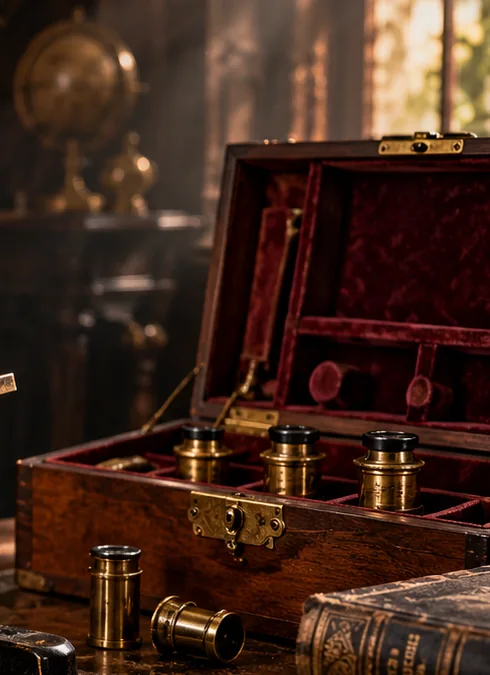
A collector’s inspection checklist for listings, shipping and returns. These notes prioritize evidence over decorative language and make no claim to appraise an individual instrument.
Read the listing as evidence, not a verdict
“Victorian,” “rare,” “museum quality” and “fully functional” are seller descriptions. Request precise photographs and a clear account of what moves. A photograph of brass is not enough to establish whether the objectives focus or the mirror is intact.
Five photos worth requesting
Ask for a full front and rear view; engraved maker’s mark; close-up of each objective and eyepiece; underside of the stage and mirror; and the case interior with accessories laid out. If important details cannot be shown, adjust your willingness to pay.
Shipping can destroy the bargain
A tall antique stand may bend or snap if shipped assembled with loose optics. Ask whether the instrument will be immobilized, with delicate accessories packed individually. Confirm insured shipping, returns and import charges before bidding—particularly for international purchases.
Recognize misleading bundles
A fitted case can conceal missing parts, while several mismatched objectives can make an incomplete specimen appear complete. Compare the actual engraved instrument to the seller’s claimed maker, and note any accessories from unrelated manufacturers.
Direct listing vs broad search
We prefer direct links to identifiable listings where an item has been found, but one-off antiques sell quickly. For browsing categories and checking alternatives, focused maker searches are more durable. Never rely on a screenshot or a historic quoted price as current availability.