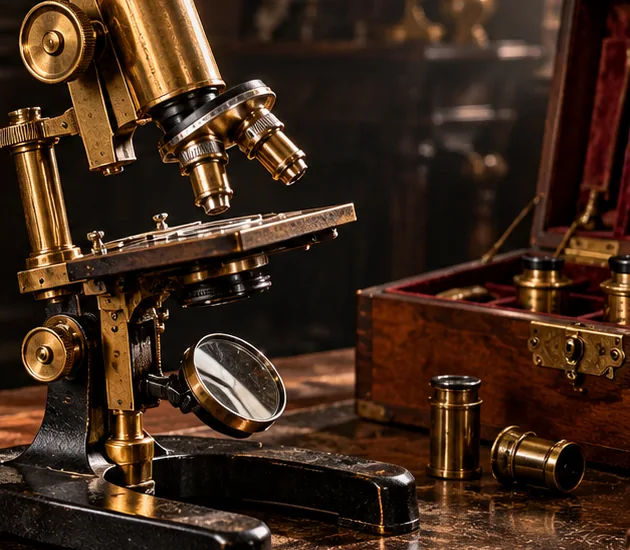
Two great German optical names, two different instrument histories, and a shared trap: the maker on the objective may not be the maker of the stand.
Begin with the instrument, not the rivalry
Carl Zeiss established his workshop in Jena in 1846; the Leitz tradition grew around Wetzlar. Both names matter profoundly in the history of microscopy, but a collector cannot rank a generic ‘Zeiss’ against a generic ‘Leitz’ without knowing the exact period, model, optical components and condition. Comparing a student stand from one era with a research instrument from another tells us very little.
Separate stand from optical system
Look for the main body or foot engraving, model designation, serial markings, and identifying features of the stand. Then inspect the objectives and eyepieces independently. Replacement optics are common enough in old laboratory equipment that a Zeiss objective on a differently made stand is not by itself suspicious; it may simply be a later useful addition. But it changes what the instrument can honestly be advertised as.
The temptation of serial charts
Serial numbers are valuable clues only when matched to a reliable, product-specific sequence or dated company record. Search results may mix cameras, microscopes, lenses and later successors into one misleading chronology. Photograph the full inscription and its location. A confident manufacturer-year claim needs a catalog, document or institutional comparator rather than a number interpreted in isolation.
What really affects a purchase
For a laboratory instrument, optical condition and smooth functioning may matter as much as its decorative brass finish. For a display collection, originality, proportions, period accessories and case may be the draw. Evaluate the seller’s claims within your own collecting goal. A flawless cosmetic restoration can be less attractive than an honestly patinated, documented example.
How to compare the right listings
Filter listings by full maker name and instrument type, then compare complete stands to complete stands. Do not lump loose objectives with full microscopes or reproductions with originals. Compare sold examples where available, adjusting for case, accessories, damage and shipping. Give every comparable its own source link and date in your notes.
Create a fair two-column comparison
Before comparing asking prices, choose two examples from roughly similar periods and intended uses. Record stand type, likely date band, maker inscription, objective makers, completeness and optical condition. Separate what each seller demonstrates in photographs from what the listing merely asserts. This prevents a richly furnished Leitz stand from looking overpriced beside a Zeiss body missing its eyepieces, or the reverse.
Consider whether your purchase is for display, working demonstration or a study collection of optical design. A visitor interested in industrial history may value an original, readable maker name and accessory kit; an operator may prioritize sound mechanics and compatible optics. Neither preference is wrong, but they should not be quietly converted into a universal ranking of makers. The best comparison remains model against model.
| Compare | Evidence to request |
|---|---|
| Maker | Exact engraving and location |
| Period | Catalog or museum comparator |
| Optics | Objective/eyepiece markings, condition |
| Complete kit | Fitted case and accessory photos |
Research exercise: document observations and cite the source behind each attribution. These are evidence prompts, not expert authentication.